
Uncertainty does not make us powerless.
Chaos theory is useful here precisely because it does not promise control. It gives us a language for sensitive trajectories and limits to prediction.
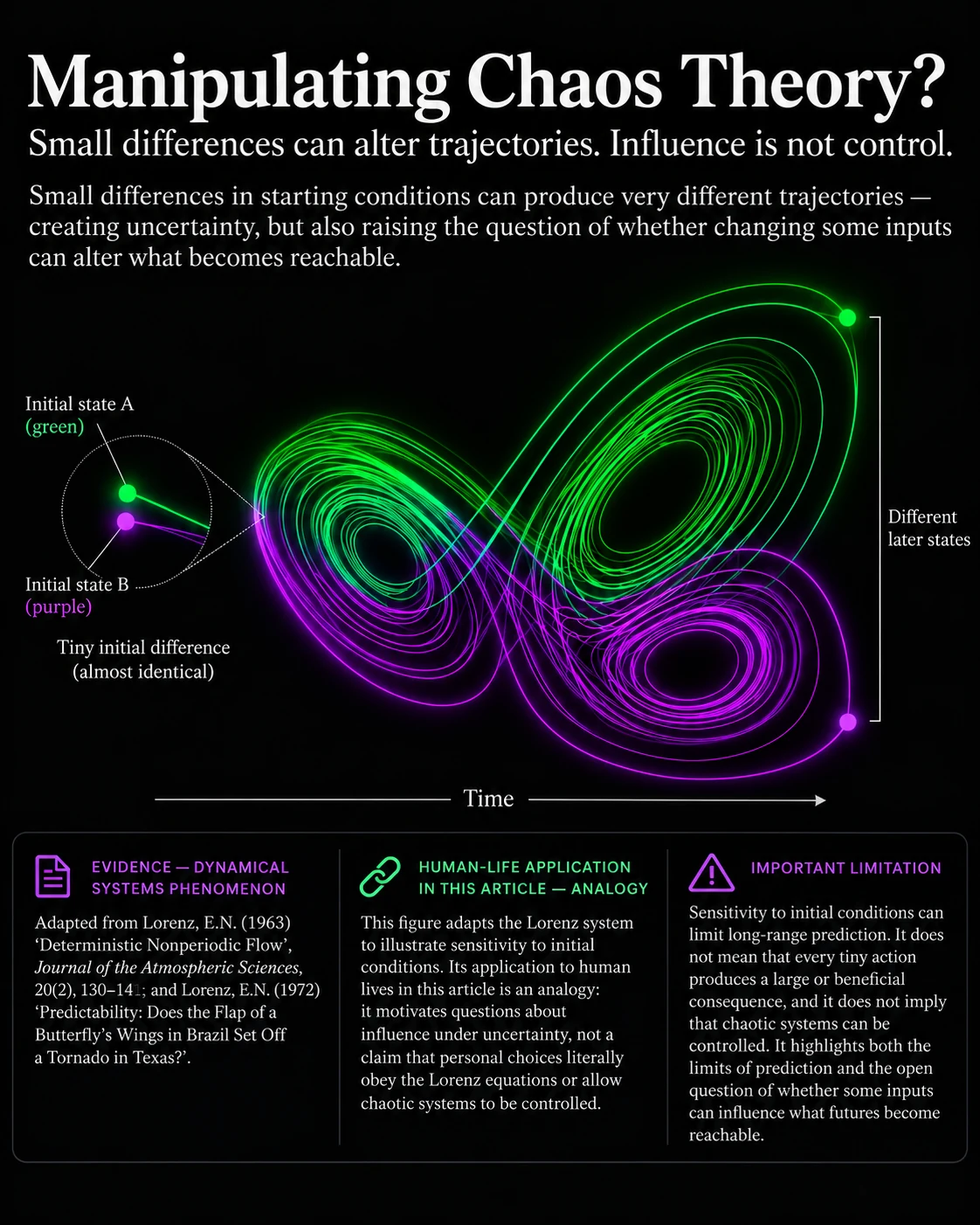
Two very similar initial states are represented by green and purple trajectories. Their paths diverge as time passes in a Lorenz-inspired depiction. The diagram distinguishes evidence about deterministic dynamical systems from the author's analogy for human possibilities: sensitive dependence does not give a method to choose or guarantee favourable outcomes.
Edward Lorenz’s work showed how a deterministic system can become difficult to predict when tiny differences in state grow over time. The lesson is often flattened into “small causes have huge effects”. That is too convenient. Sensitive dependence is about divergence and predictability, not a formula for producing beneficial change.
The human-life argument begins only after that distinction is clear. A life is not a Lorenz system. But a person is an adaptive agent inside environments they cannot fully predict. We can sometimes change some of the conditions from which later options emerge, even when we cannot know the final trajectory.
Changing what becomes reachable.
A decision does not need to determine our destination in order to change which decisions become available next.
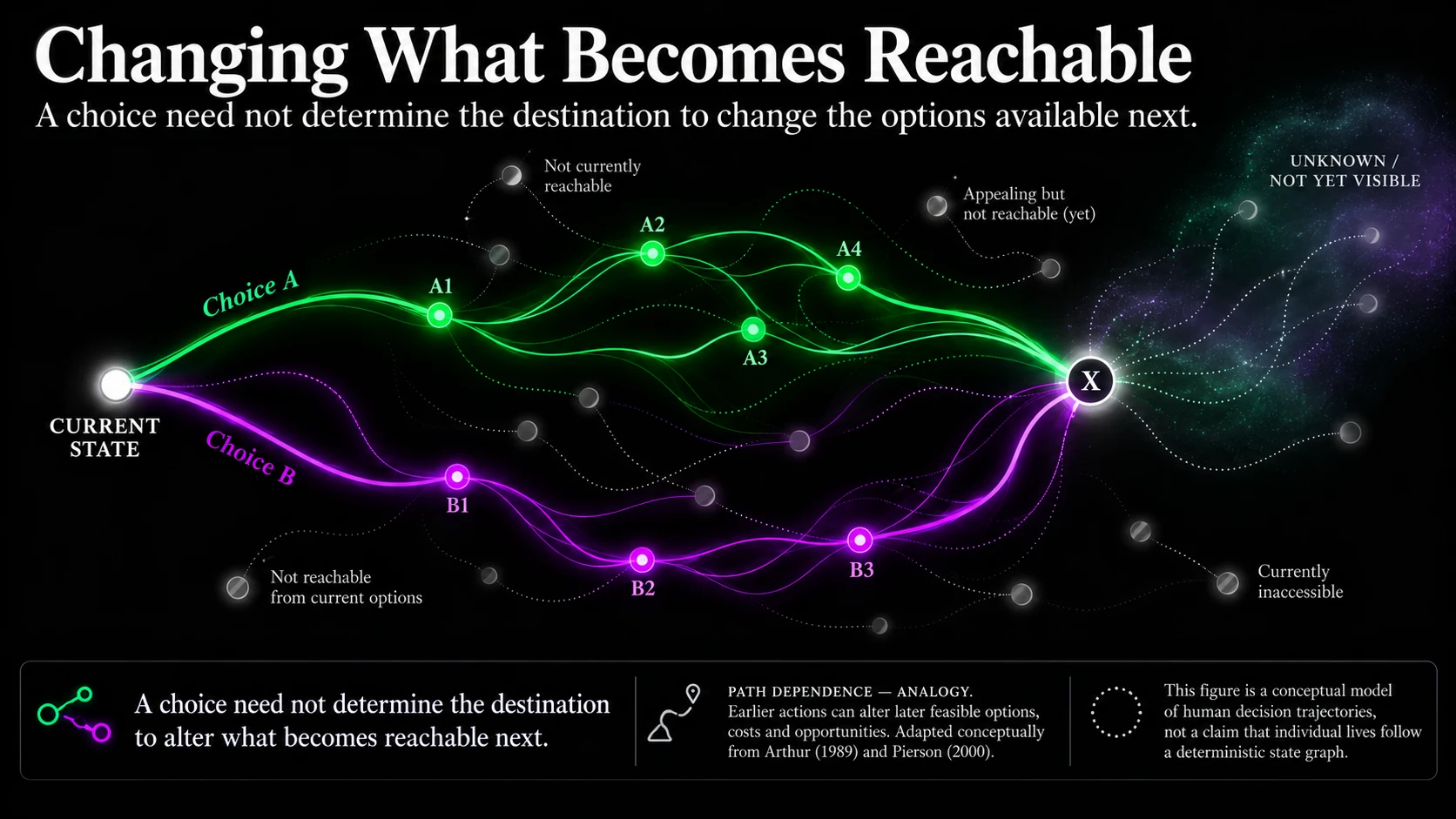
A current state branches into Choice A and Choice B, with subsequent nodes showing some paths available and others presently inaccessible or unknown. The options reached later depend partly on the initial branch and what happens along it. It is a schematic model, not a literal graph of any person's future.
Path dependence provides a separately studied mechanism in settings such as technology adoption and political institutions, beyond borrowing the imagery of chaos. Timing, sequence and self-reinforcing processes can affect what becomes easier, harder or impossible later. Moving from political economy or technology adoption into individual lives is still an inference and analogy - but the question becomes concrete: which choices alter the option set?
Networks matter because opportunity is partly informational. A connection outside an immediate circle may expose a person to information or opportunities that are not circulating locally. Granovetter’s weak-ties work is relevant here, and large-scale causal evidence from LinkedIn adds a modern qualification: the effect is not “the weaker the tie, the better”. It is heterogeneous and nonlinear. Those experiments concerned job mobility on LinkedIn; results differed by industry and by how tie strength was measured, so they do not establish a universal networking rule.
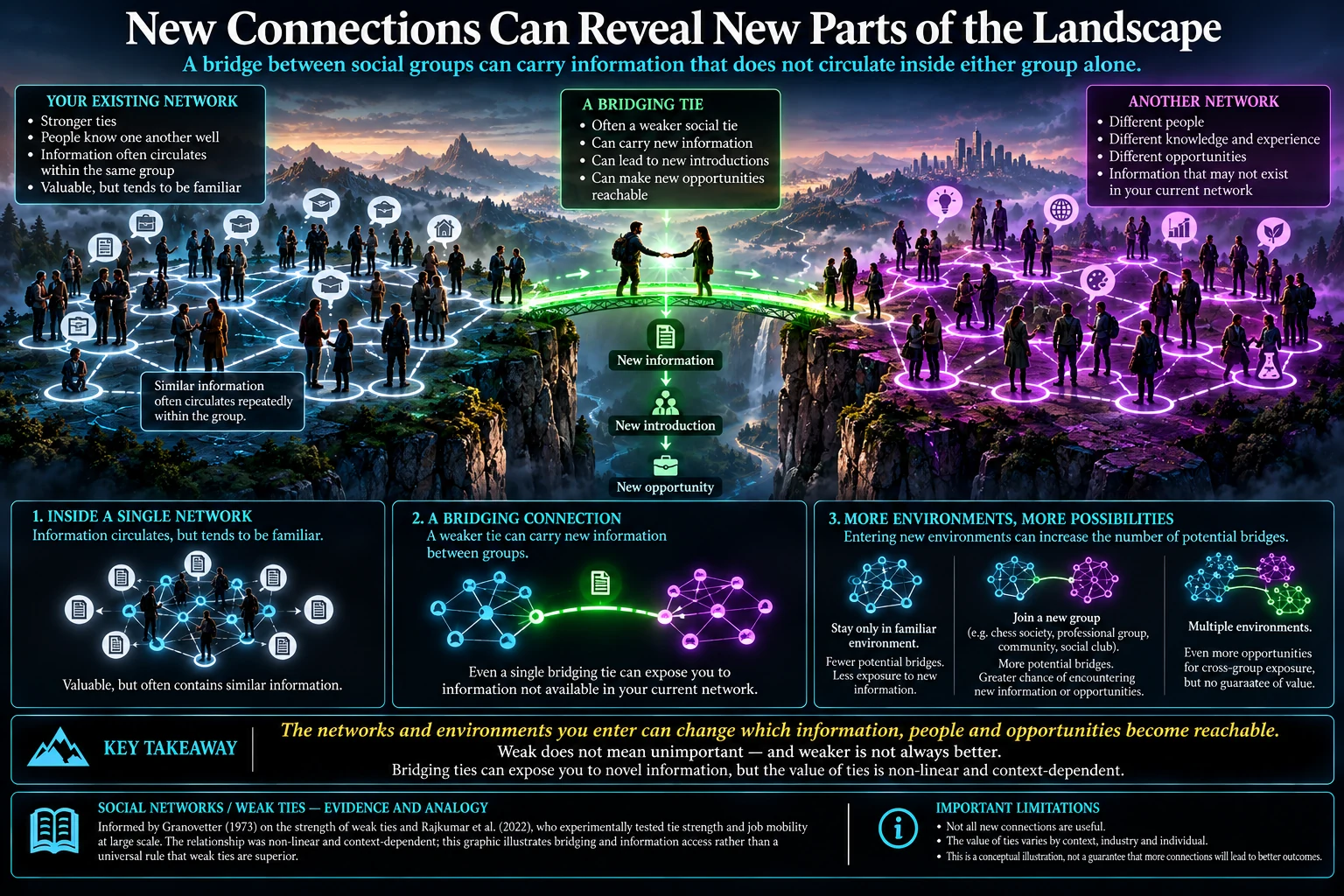
The diagram shows two otherwise separated social networks and a possible bridging relationship across them. A bridge can expose new information, introductions and environments that might not circulate inside one's immediate network. The value of an additional connection is contextual and nonlinear, not automatically positive.
Path dependence
Arthur (1989) and Pierson (2000) support history, timing, sequence and reinforcement as mechanisms that shape later states.
Network bridges
Granovetter (1973) and Rajkumar et al. (2022) support mechanisms by which social structure can affect information and opportunity.
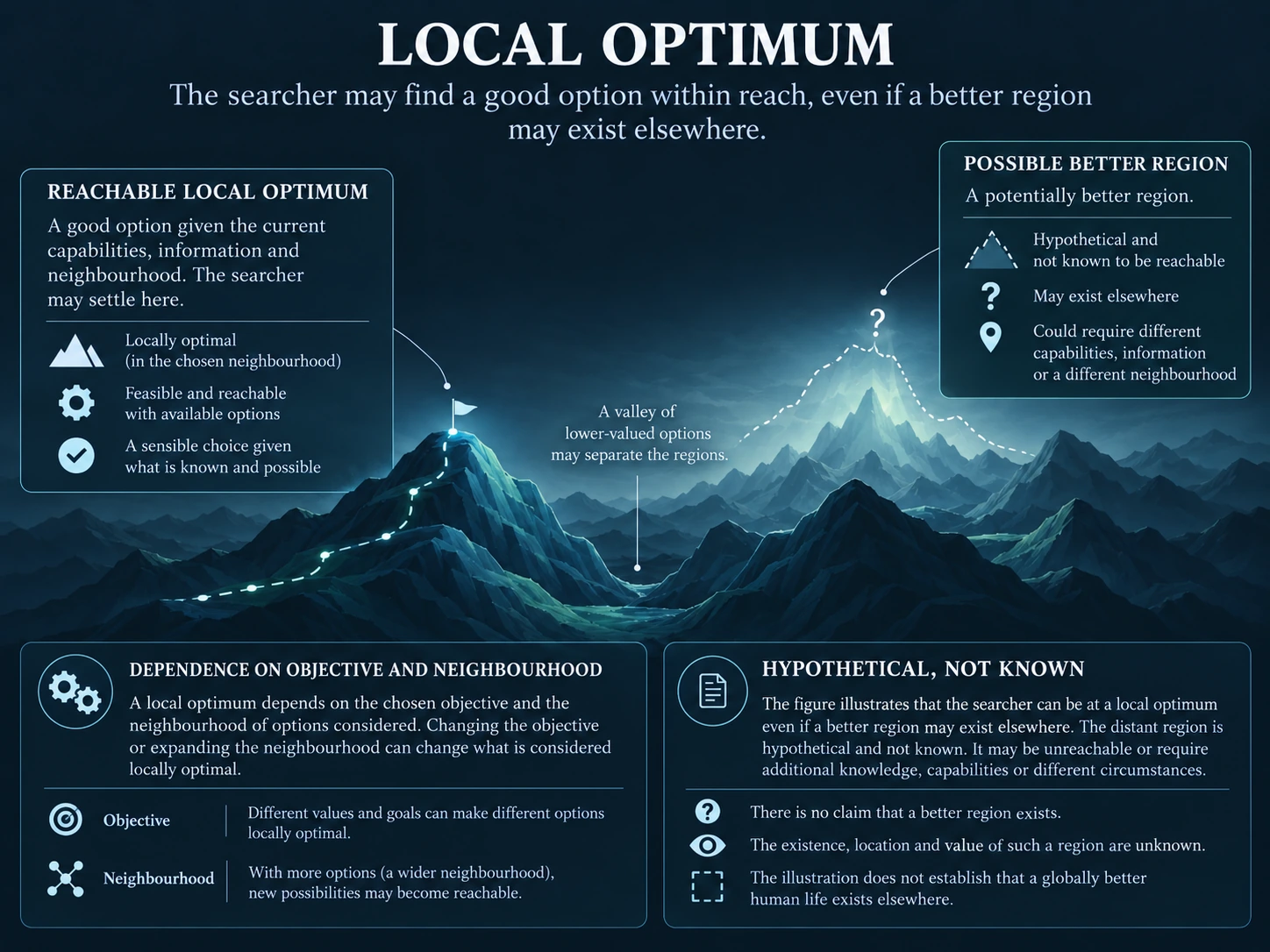
A person is pictured on an apparently good nearby peak while the diagram depicts a possible distant higher peak separated by a costly valley. Computational panels contrast one objective with adding another to change the search landscape. The illustration is hypothetical: it does not establish that a globally better human life exists elsewhere, nor that any known objective captures human value.
A better searcher does not merely search faster.
Learning can alter capability, representation and judgement - the things we bring to the next decision before the next decision even exists.
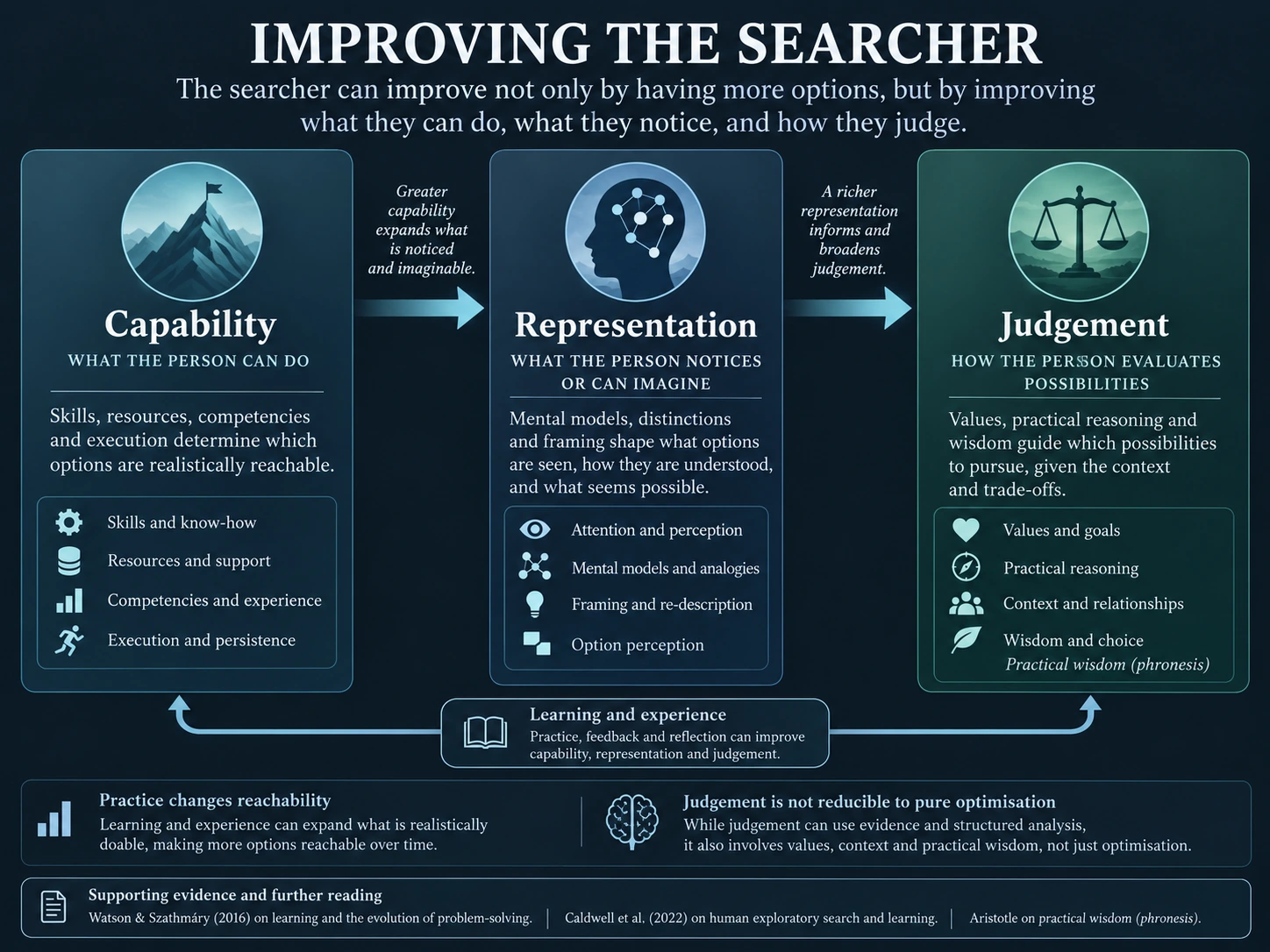
The model separates capability (what a person can do), representation (which options and distinctions they perceive), and judgement (which options they consider worth pursuing). Additional learning can change all three, but judgement also needs values and context. It is conceptual, not a validated human optimiser.
It is tempting to describe humans as “programmable”, but the metaphor is too crude if taken literally. People learn, adapt, form habits and acquire skills, but they do not update according to a simple software-like rule.
The better question is whether learning can change the capabilities, representations and habits we bring to future decisions. Human skill-acquisition evidence supports a modest version of that claim: practice and learning can contribute to changes in skilled performance, although they do not explain every individual difference.
Computer science then supplies an analogy rather than proof. A learned representation can change the neighbourhood available to a computational search process. Human learning can sometimes do something conceptually similar: learning a distinction, language, tool or model can reveal actions that previously were not part of the represented problem.
Skill acquisition
Macnamara, Hambrick and Oswald (2014) report that deliberate practice explains some performance variation, with the proportion differing substantially between domains; much variation remains unexplained.
Phronesis
Aristotle’s practical wisdom asks what good judgement looks like when knowledge, values and context must be brought together.
Buy the information before the commitment.
When learning is cheap relative to being wrong, a small reversible test may be more valuable than committing early for the sake of certainty.
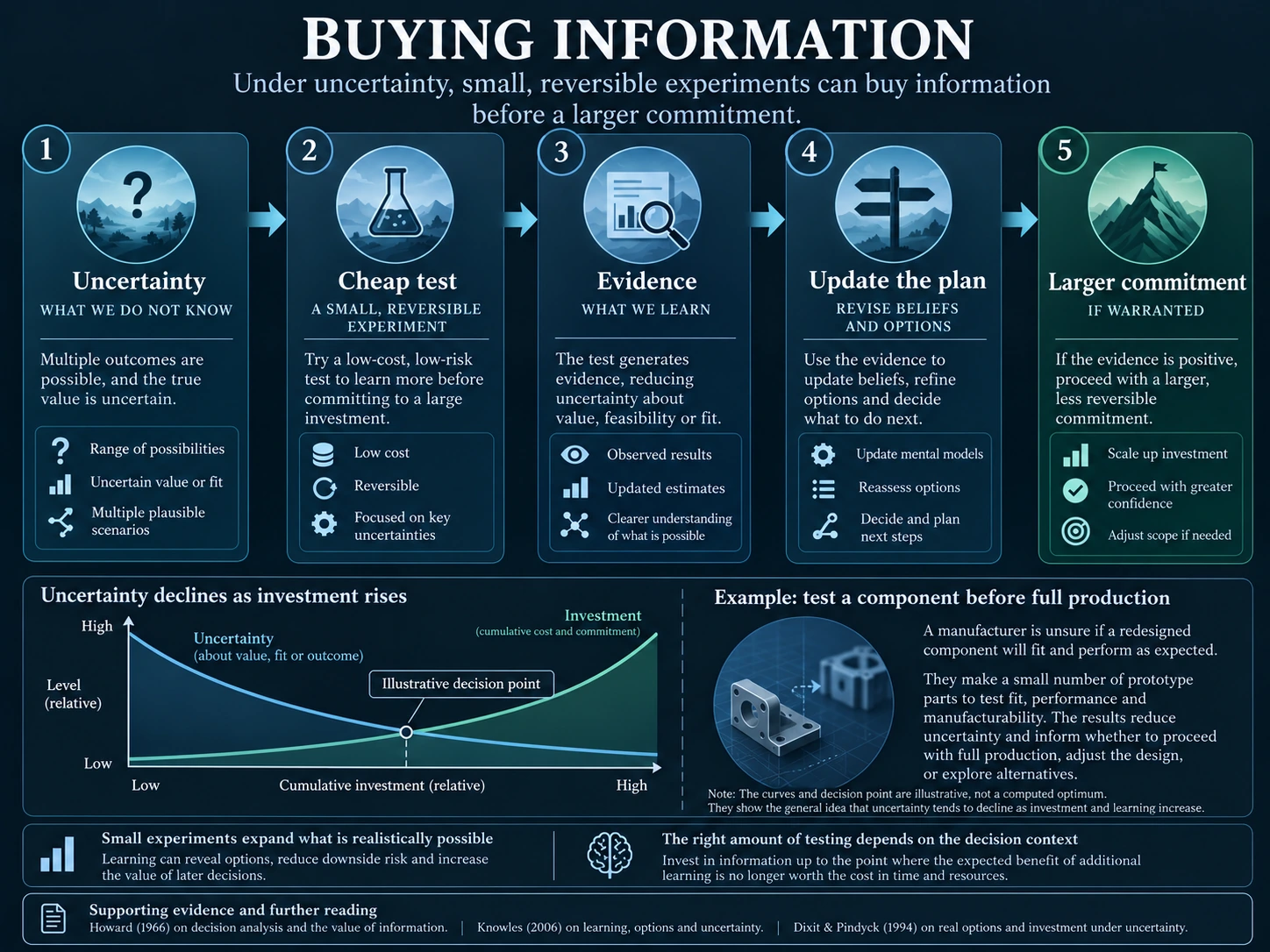
The upper sequence shows uncertainty, a low-cost reversible test, evidence, an update to the plan and a possible larger commitment. A lower stylised graph compares declining uncertainty with increasing investment; this is *illustrative*, not a computed optimum or a guaranteed minimum-risk point. A practical example shows checking the uncertain fit of a small component before making a full part.
Some decisions are expensive evaluations: changing career, moving, starting a business, investing heavily, committing to education or entering a serious relationship. Information has value when it can change what we would choose - and its value depends on the consequences of being wrong, the cost of learning and the reversibility of the decision.
Optionality is not an end in itself. A person who preserves every option forever never commits enough to compound anything. The useful distinction is between exploration that buys information and delay that merely postpones choice.
Other people learn from us too.
They observe, remember, cooperate, defect, forgive, retaliate, imitate and recommend. Our actions can therefore alter how parts of the social environment respond later.
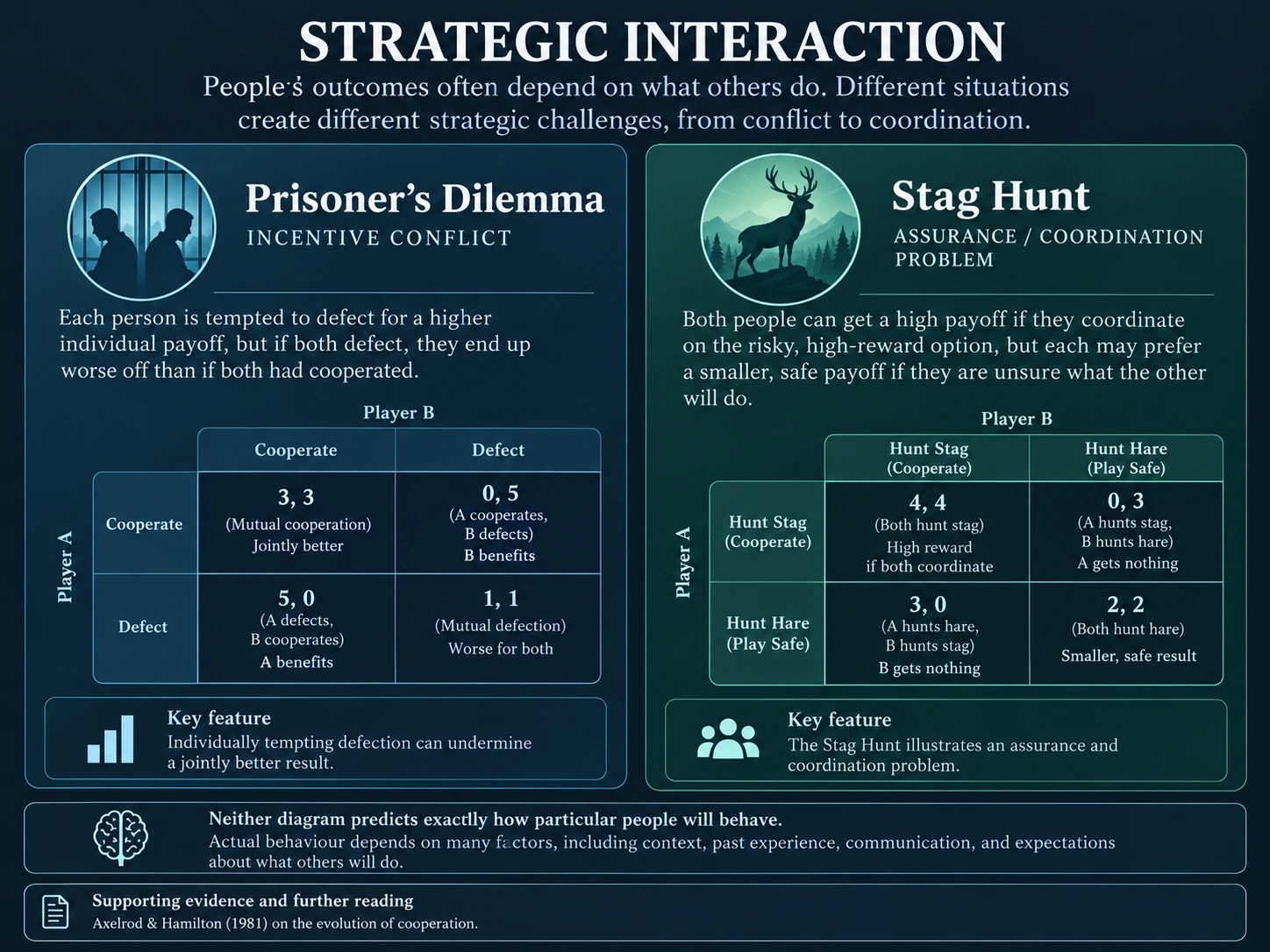
The Prisoner's Dilemma illustrates how individually tempting defection can undermine a jointly preferable cooperative result. A Stag Hunt contrasts this with an assurance problem: a more valuable joint result may require enough trust to coordinate, while a smaller safe individual result remains available. Neither diagram predicts how particular people will behave.
Repeated-game models (Axelrod and Hamilton, 1981; Nowak, 2006) and reciprocal-altruism theory (Trivers, 1971) explain conditions under which cooperation may persist. Balliet and Van Lange (2013) examine how trust relates to cooperation across social dilemmas. Reputation extends the mechanism beyond the original pair: what others believe about our past behaviour can alter later opportunities and willingness to cooperate.
This gives a non-mystical way to examine part of what people sometimes call “karma”. Research on indirect reciprocity and reputation (Nowak and Sigmund, 2005), alongside cooperative cascades observed in laboratory public-goods games with changing groups of strangers (Fowler and Christakis, 2010), illustrates some conditions in which behaviour may have delayed social consequences. That does not turn karma into a scientific law. Good conduct does not guarantee good outcomes, and unethical actors can prosper under some incentives.
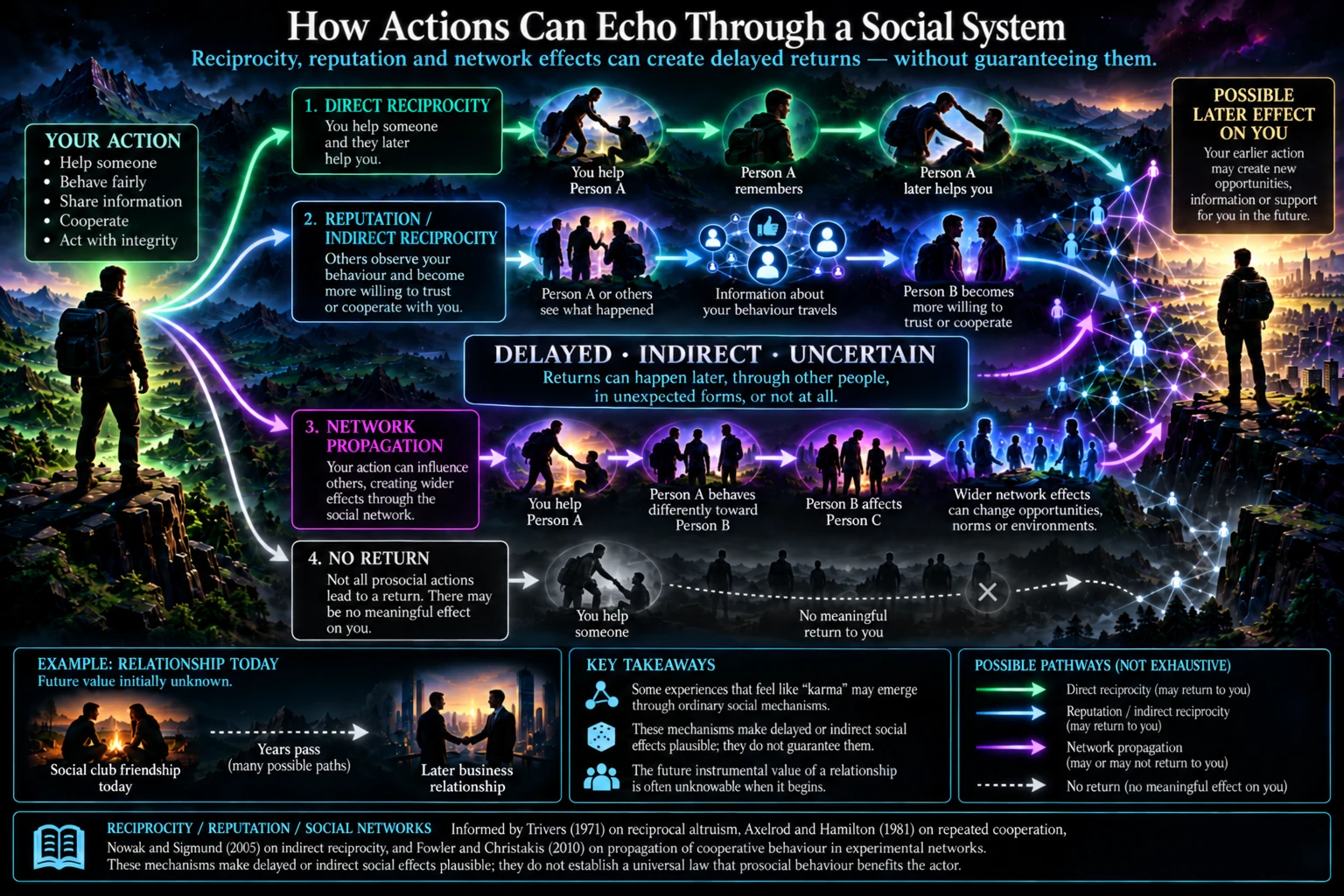
A helpful action might lead to a direct return, change one's reputation and thereby affect indirect cooperation, propagate through social contacts, or have no meaningful return at all. The diagram deliberately includes dead-end pathways; it does not establish a universal scientific law of karma.
Optimisation begins inside a value system.
A more powerful optimiser can make a badly specified objective more dangerous. Before asking how to search, we have to ask what counts as better.
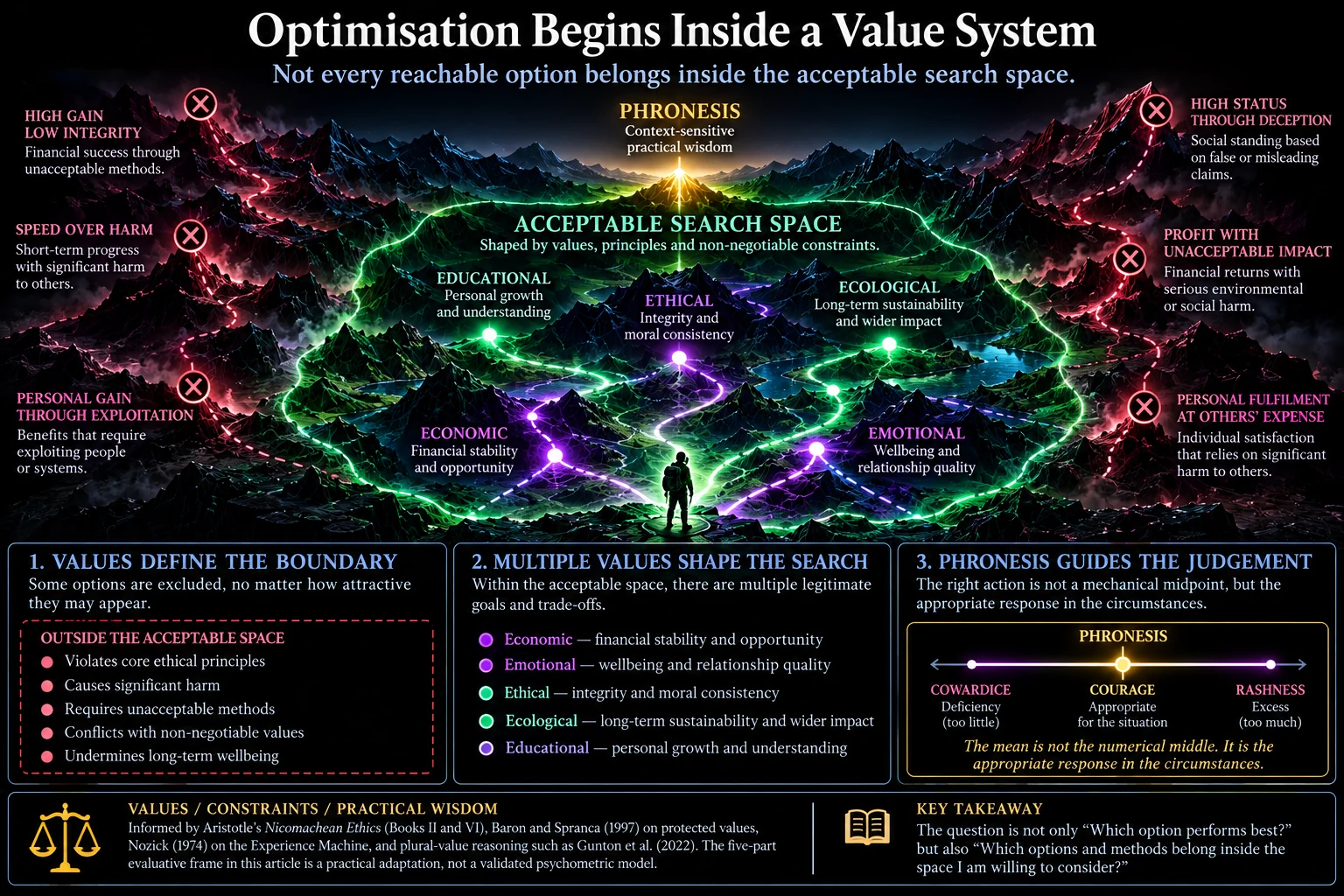
Five lenses - economic, emotional, ethical, ecological and educational - lie within a boundary of acceptable choices. Some apparently attractive opportunities fall outside that boundary because they involve exploitation, deception, significant harm or unacceptable methods. Practical wisdom (phronesis) is shown as context-sensitive judgement, not an arithmetic middle between every alternative.
Decisions can be evaluated through more than one kind of value. Inspired by pluralistic approaches to valuation such as Gunton et al. (2022), I use five practical lenses here: Economic, Emotional, Ethical, Ecological and Educational. These five lenses are a framework developed for this paper, not a validated scale and not a claim that every decision reduces to these dimensions.
Some values may operate like objectives to improve, while others behave more like constraints or thresholds. Research on protected values (Baron and Spranca, 1997) is descriptively useful here; it does not decide what our values should be. Aristotle adds the question of practical judgement. His doctrine of the mean is not an arithmetic compromise and must not be used to split the difference between good evidence and bad evidence.
Agency operates inside constraints.
The same experiment can be cheap and reversible for one person, yet financially, socially or physically costly for another.
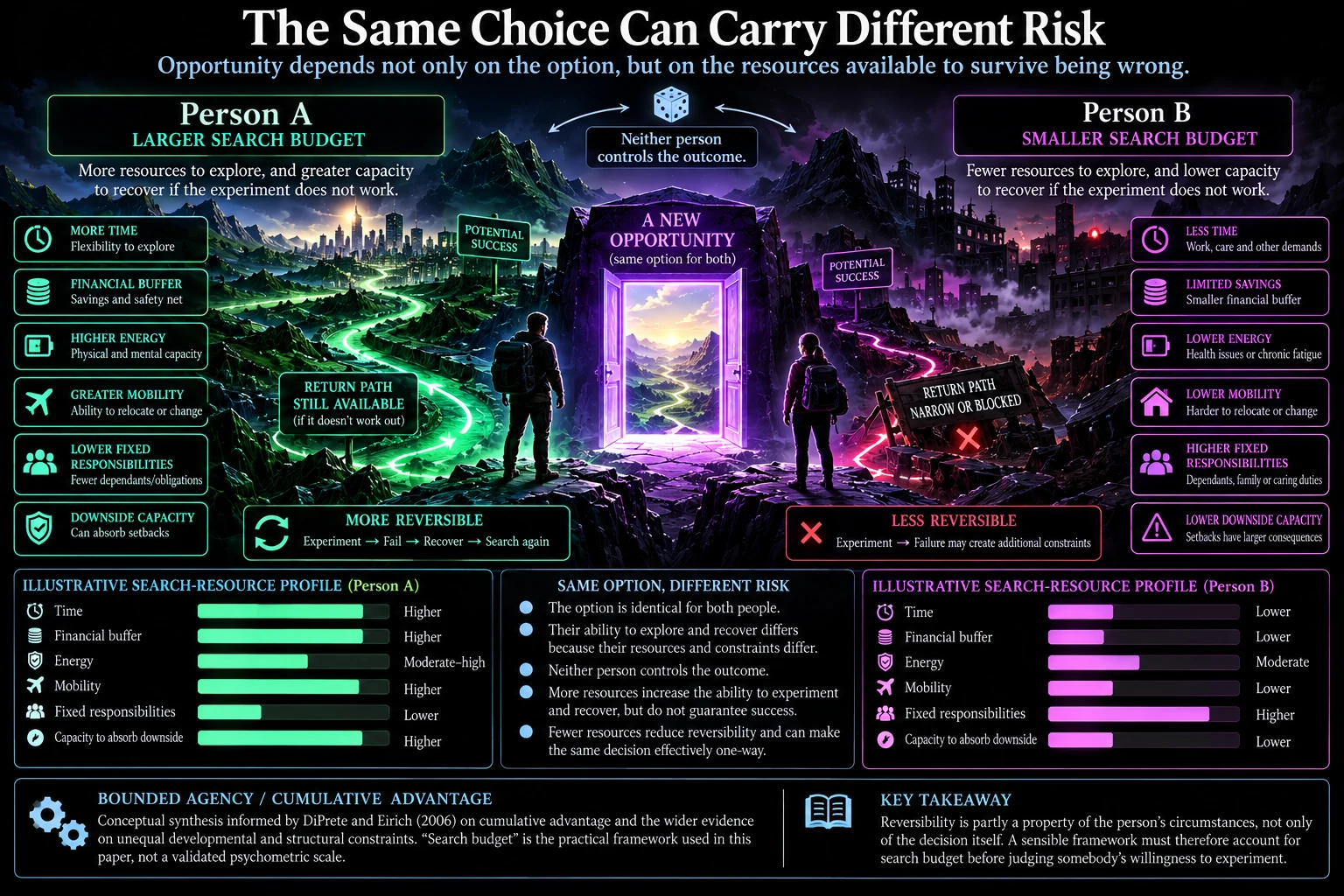
Two fictional people face the same hypothetical opportunity. Person A has more time, financial cushion, mobility, energy and capacity to recover from a setback. Person B faces greater constraints on time, financial resources, health, mobility and caring responsibilities. The bars are illustrative resource profiles, not measurements, diagnoses or individual scores. No person's outcome is guaranteed.
Our freedom to experiment is constrained by a finite search budget: the time, resources, capacity and latitude we have to explore alternatives and absorb failure. The deeper framework includes time, money, mobility, energy, responsibilities, access, social permission, health and downside capacity.
This matters because an argument about agency can easily become unfair. People do not choose the full landscape into which they are placed. Research on cumulative advantage and inequality (DiPrete and Eirich, 2006) describes mechanisms through which earlier conditions and structural constraints can reshape later opportunity sets.
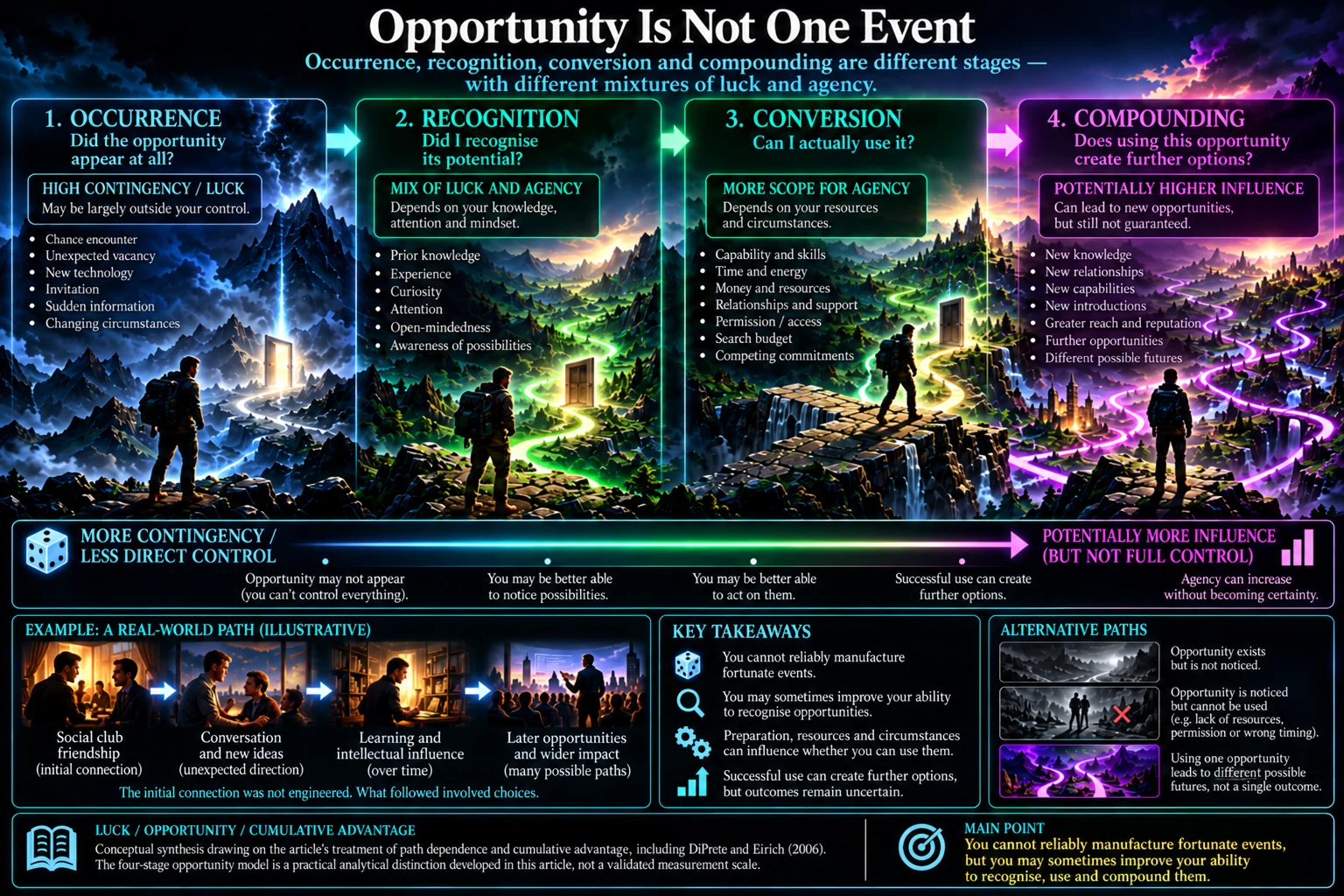
Potential opportunity is broken into occurrence, recognition, conversion and compounding. Chance can influence whether an option arises, while preparation and available resources can influence recognition or the ability to use it. A later opportunity may create further options, but those possibilities remain contingent and cannot be manufactured with certainty.
Judge the process with the information available at the time.
A good decision can produce a bad result. A poor decision can get lucky. Outcomes matter - but outcome quality and decision quality are not identical.
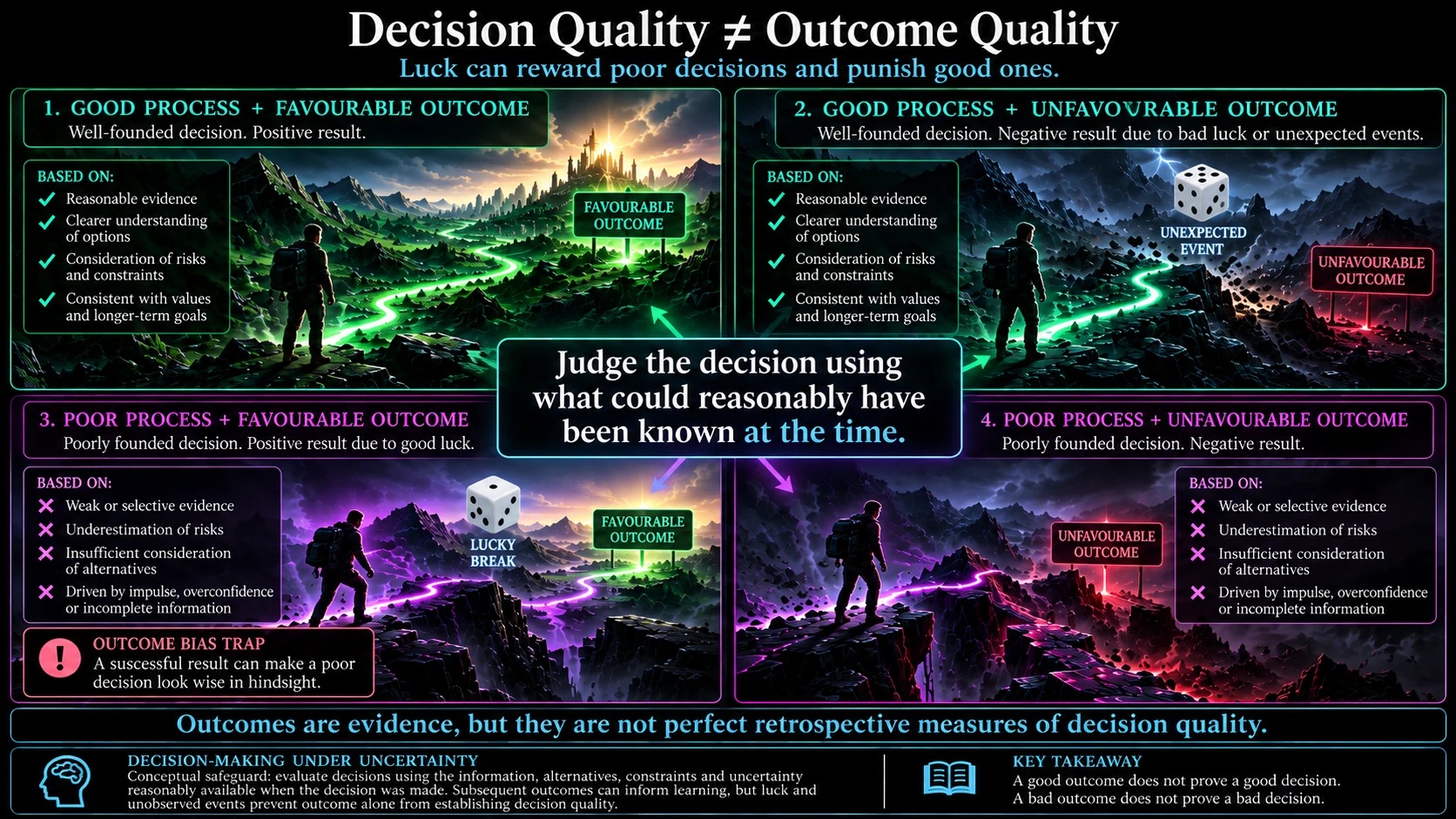
Four panels distinguish good process with favourable outcome, good process with unfavourable outcome, poor process with favourable outcome, and poor process with unfavourable outcome. Luck and unexpected events can separate process quality from outcome quality; a positive result alone does not retrospectively prove a sound choice.
Experimental research on outcome bias (Baron and Hershey, 1988) shows that knowledge of the eventual result can distort retrospective evaluations of the original decision. The safeguard is not to ignore outcomes; it is to treat them as evidence rather than as a perfect verdict on the quality of the earlier reasoning.
That leads to a recursive view of intelligent search. Values constrain the search. Observation and learning improve the map. Experiments buy information. Cooperation changes the social environment. Commitment allows compounding. Review updates the system.
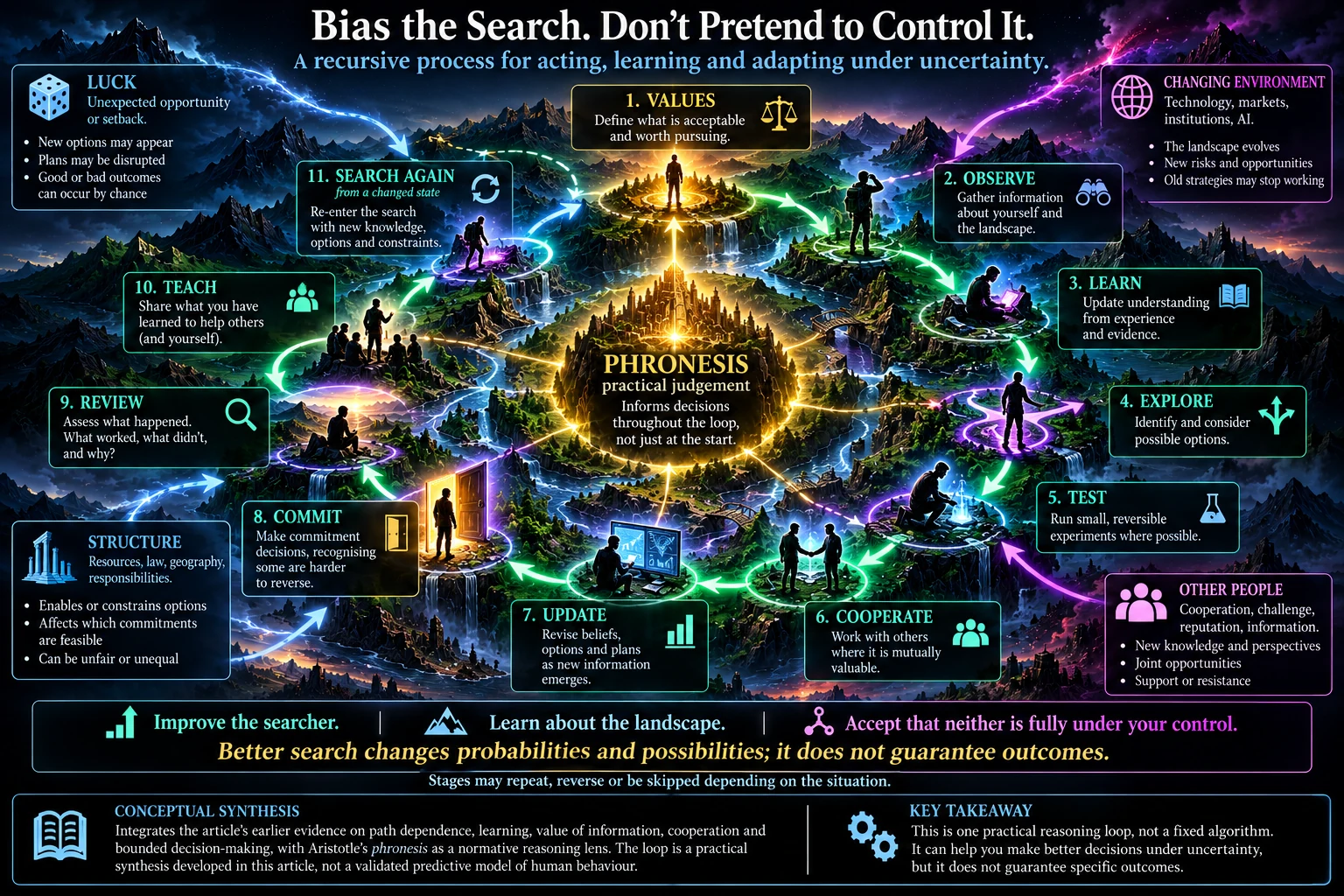
An illustrative loop moves through values, observation, learning, exploration, testing, cooperation, updates, commitment, review, teaching and searching again. Luck, changing environments, other people and structural constraints operate around it. The order can be revised, skipped or repeated; no predictive success guarantee or empirically validated life-optimisation algorithm is claimed.
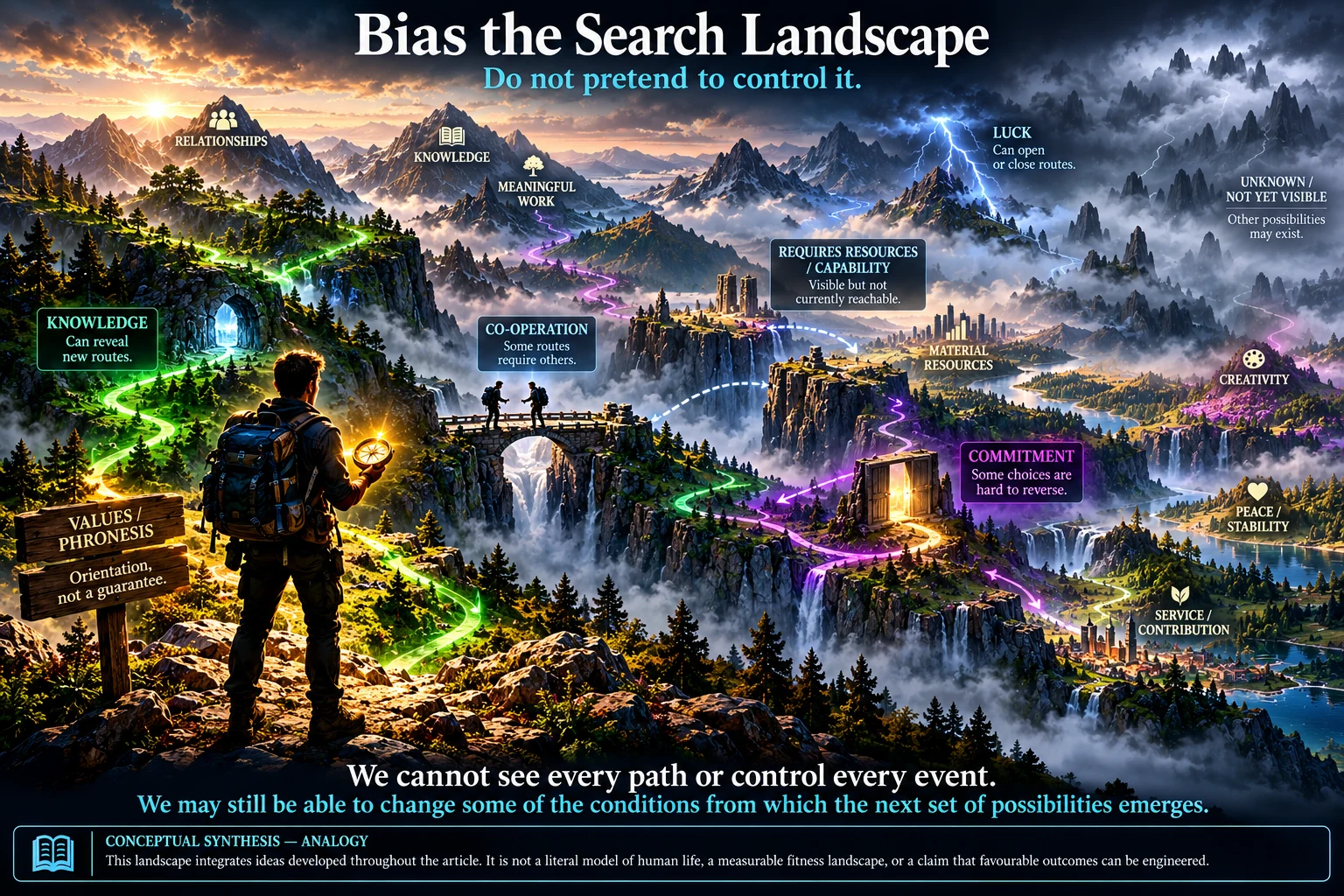
A traveller faces possible routes associated with knowledge, relationships, values, creativity, meaningful work, cooperation, stability, commitment and resources. Luck and unknown regions can open or close routes. The conclusion is about influencing some conditions of possible future choices while recognising that the eventual path is not fully visible or controllable.
We cannot see every path. We cannot control every event.
But we may be able to change some of the conditions from which the next set of possibilities emerges.
Bias the search landscape. Do not pretend to control it.
References
References supporting the research, theory, philosophy and documented examples discussed in this Insight. Personal reading recommendations appear separately below.
Aristotle (2009) The Nicomachean Ethics. Translated by D. Ross. Revised with an introduction and notes by L. Brown. Oxford: Oxford University Press. doi:10.1093/actrade/9780199213610.book.1.
Arthur, W.B. (1989) ‘Competing technologies, increasing returns, and lock-in by historical events’, The Economic Journal, 99(394), pp. 116–131. doi:10.2307/2234208.
Axelrod, R. and Hamilton, W.D. (1981) ‘The evolution of cooperation’, Science, 211(4489), pp. 1390–1396. doi:10.1126/science.7466396.
Balliet, D. and Van Lange, P.A.M. (2013) ‘Trust, conflict, and cooperation: A meta-analysis’, Psychological Bulletin, 139(5), pp. 1090–1112. doi:10.1037/a0030939.
Baron, J. and Hershey, J.C. (1988) ‘Outcome bias in decision evaluation’, Journal of Personality and Social Psychology, 54(4), pp. 569–579. doi:10.1037/0022-3514.54.4.569.
Baron, J. and Spranca, M. (1997) ‘Protected values’, Organizational Behavior and Human Decision Processes, 70(1), pp. 1–16. doi:10.1006/obhd.1997.2690.
Caldwell, J., Knowles, J., Thies, C., Kubacki, F. and Watson, R. (2022) ‘Deep Optimisation: Transitioning the Scale of Evolutionary Search by Inducing and Searching in Deep Representations’, SN Computer Science, 3, article 253. doi:10.1007/s42979-022-01109-w.
DiPrete, T.A. and Eirich, G.M. (2006) ‘Cumulative advantage as a mechanism for inequality: A review of theoretical and empirical developments’, Annual Review of Sociology, 32, pp. 271–297. doi:10.1146/annurev.soc.32.061604.123127.
Dixit, A.K. and Pindyck, R.S. (1994) Investment under Uncertainty. Princeton, NJ: Princeton University Press.
Fowler, J.H. and Christakis, N.A. (2010) ‘Cooperative behavior cascades in human social networks’, Proceedings of the National Academy of Sciences, 107(12), pp. 5334–5338. doi:10.1073/pnas.0913149107.
Granovetter, M.S. (1973) ‘The strength of weak ties’, American Journal of Sociology, 78(6), pp. 1360–1380. doi:10.1086/225469.
Gunton, R.M., Hejnowicz, A.P., Basden, A., van Asperen, E.N., Christie, I., Hanson, D.R. and Hartley, S.E. (2022) ‘Valuing beyond economics: A pluralistic evaluation framework for participatory policymaking’, Ecological Economics, 196, article 107420. doi:10.1016/j.ecolecon.2022.107420.
Howard, R.A. (1966) ‘Information value theory’, IEEE Transactions on Systems Science and Cybernetics, 2(1), pp. 22–26. doi:10.1109/TSSC.1966.300074.
Knowles, J. (2006) ‘ParEGO: A hybrid algorithm with on-line landscape approximation for expensive multiobjective optimization problems’, IEEE Transactions on Evolutionary Computation, 10(1), pp. 50–66. doi:10.1109/TEVC.2005.851274.
Knowles, J.D., Watson, R.A. and Corne, D.W. (2001) ‘Reducing local optima in single-objective problems by multi-objectivization’, in Zitzler, E. et al. (eds) Evolutionary Multi-Criterion Optimization (EMO 2001). Lecture Notes in Computer Science, vol. 1993. Berlin: Springer, pp. 269–283. doi:10.1007/3-540-44719-9_19.
Lorenz, E.N. (1963) ‘Deterministic nonperiodic flow’, Journal of the Atmospheric Sciences, 20(2), pp. 130–141. doi:10.1175/1520-0469(1963)020<0130:DNF>2.0.CO;2.
Lorenz, E.N. (1972) ‘Predictability: Does the flap of a butterfly’s wings in Brazil set off a tornado in Texas?’, paper presented to the AAAS Section on Environmental Sciences, New Approaches to Global Weather: GARP, 139th Meeting of the American Association for the Advancement of Science, Washington, DC, 29 December. Original presentation (PDF)
Macnamara, B.N., Hambrick, D.Z. and Oswald, F.L. (2014) ‘Deliberate practice and performance in music, games, sports, education, and professions: A meta-analysis’, Psychological Science, 25(8), pp. 1608–1618. doi:10.1177/0956797614535810.
Nozick, R. (1974) Anarchy, State, and Utopia. New York: Basic Books.
Nowak, M.A. (2006) ‘Five rules for the evolution of cooperation’, Science, 314(5805), pp. 1560–1563. doi:10.1126/science.1133755.
Nowak, M.A. and Sigmund, K. (2005) ‘Evolution of indirect reciprocity’, Nature, 437, pp. 1291–1298. doi:10.1038/nature04131.
Pierson, P. (2000) ‘Increasing returns, path dependence, and the study of politics’, American Political Science Review, 94(2), pp. 251–267. doi:10.2307/2586011.
Rajkumar, K., Saint-Jacques, G., Bojinov, I., Brynjolfsson, E. and Aral, S. (2022) ‘A causal test of the strength of weak ties’, Science, 377(6612), pp. 1304–1310. doi:10.1126/science.abl4476. Study abstract
Sugar, A. (2010) What You See Is What You Get: My Autobiography. London: Macmillan. Amstrad’s first-person account
Trivers, R.L. (1971) ‘The evolution of reciprocal altruism’, The Quarterly Review of Biology, 46(1), pp. 35–57. doi:10.1086/406755.
Watson, R.A. and Szathmáry, E. (2016) ‘How can evolution learn?’, Trends in Ecology & Evolution, 31(2), pp. 147–157. doi:10.1016/j.tree.2015.11.009.
Recommended Reading: Books and Papers
These are personal recommendations rather than an evidence hierarchy. Some are academic or philosophical sources used in the article; others are practical, historical or culturally influential works that have shaped how I think about priorities, judgement, business, reputation and the search landscape. Inclusion does not imply endorsement of every claim in a work, and several entries are influential rather than contemporary scientific evidence.